Editorial illustration.
Originally published 16 June 2023; rewritten and reviewed on 15 October 2026.
When my Kentico 12 certification expired, I decided to sit for the Xperience 13 developer exam. In my original post, I wrote down two straightforward reasons: keeping the company’s Kentico Gold Partner requirements in good standing, and testing my own grasp of the newer platform rather than coasting on older habits.
Passing mattered for the paperwork, of course, but the preparation itself was what made the exercise worthwhile. It forced me to confront the gap between recognising a feature name in a slide deck and understanding how that feature behaves inside a real ASP.NET project.
Project experience gave the documentation context
Moving from Kentico 12’s older Portal Engine era into Xperience 13 meant leaning much harder into modern ASP.NET MVC and ASP.NET Core patterns—Page Builder components, explicit separation between the administration app and the live site, and stricter dependency injection.
Because I was already building and maintaining client sites in ASP.NET, the official documentation became far easier to navigate. Reading about cache dependencies, content tree routing, or staging synchronisation made immediate sense when I could tie each section back to a production bug or configuration choice I had actually seen on the job.
Experience does not make exam prep unnecessary, though. It just gives the reading somewhere to stick. Every developer has blind spots shaped by the tickets they happen to get assigned. For me, topics like macro security, scheduled tasks, and less-used marketing modules needed deliberate revision instead of relying on day-to-day confidence.
Preparing the environment as well as the notes
Before starting serious revision, I set up a clean local Xperience 13 sandbox on my machine—database, admin instance, live site project, and quick access to the product docs. Having a working local environment meant I did not have to guess what a setting in the admin UI actually wrote to the database or how a widget property behaved when rendered.
If you are preparing for any vendor exam today, always check the current exam rules, permitted references, and format directly with the vendor. My 2023 study setup reflects how I practised concepts locally, not a statement of current assessment policies or partner criteria.
Treating the certificate as a checkpoint
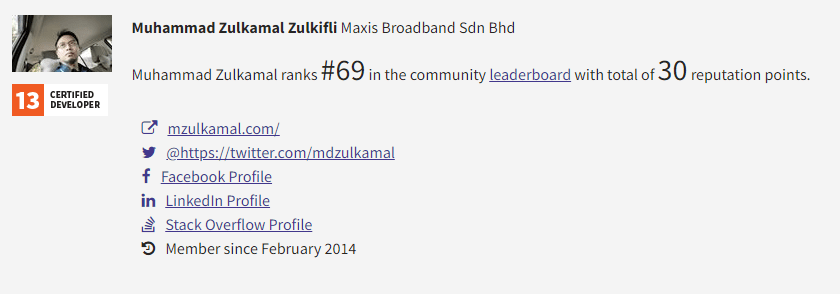
Completing the exam and earning the Kentico Xperience 13 Certified Developer credential felt like a solid milestone at the time. The original profile screenshot is kept at the bottom of this article as part of that record; naturally, it is a snapshot of 2023 rather than a claim that every credential remains active forever.
In Malaysia’s agency and enterprise CMS market, certifications carry real weight during client pitches and partner audits. They signal baseline discipline. Still, a badge on a profile only opens the door—it never replaces knowing how to trace a broken deployment at 11 PM or figuring out why a mismatched library version broke a custom Web API endpoint.
The habit I am glad I built is simple: study the version actually in front of you, practise the parts of the platform you rarely touch, and treat the exam result as a checkpoint rather than the finish line.
Related reading