Editorial illustration.
Originally published 16 June 2023; rewritten and reviewed on 15 October 2026.
In client meetings and tech discussions, conversations about AI tend to jump tracks without warning. Someone starts by asking about a spam filter or a document search bar, shifts to “machine learning”, and ten minutes later everyone is debating whether software is becoming self-aware.
When those categories get mashed together, engineering decisions suffer. A client ends up asking for a generative model when a deterministic rule or a PostgreSQL full-text index would be faster, cheaper, and far easier to maintain. To keep software architecture grounded, it helps to separate three distinct things: the problem domain, the technique used, and the capability claimed.
Start with the problem domain, not the buzzword
Most practical AI work falls into recognisable application areas:
- Language processing: Routing support tickets, summarising long PDFs, extracting fields from messy Malay-and-English customer messages, or improving search relevance.
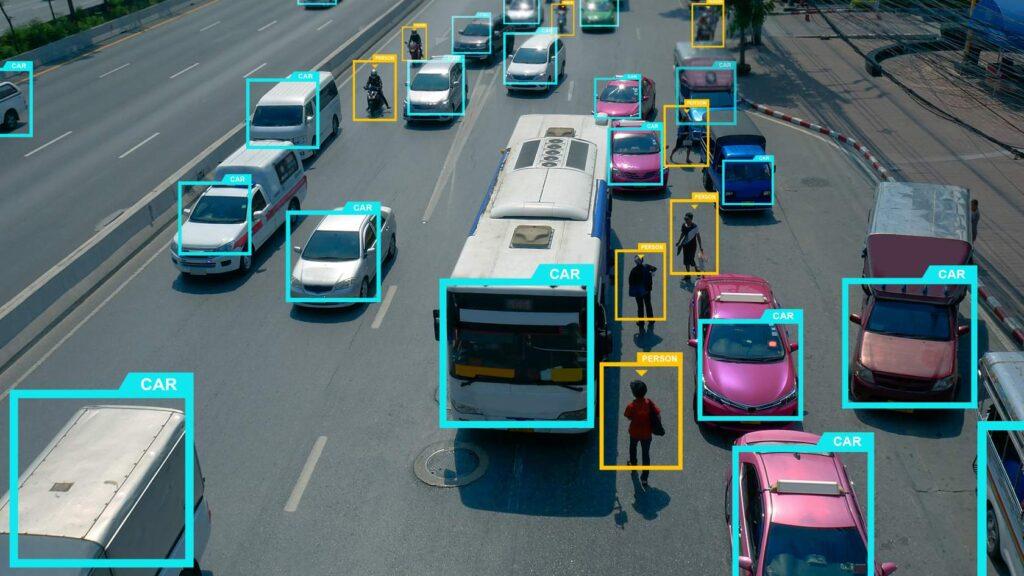
- Computer vision: Reading receipt totals via OCR, checking whether an uploaded ID photo is blurry, or flagging defects on a production line.
- Prediction and forecasting: Estimating stock demand, churn risk, or server load from historical records.
- Recommendations and ranking: Ordering products, articles, or search results based on user behaviour and metadata.
Naming the area clarifies what the feature is meant to do, though it still says nothing about accuracy or reliability. For a support-ticket classifier, the useful questions are concrete: which categories exist, how often do edge cases appear, and what happens when the system guesses wrong?
Separate techniques from a speculative capability ladder
Underneath those application areas sit very different techniques:
- Rule-based systems and heuristics: Explicit
if/elselogic, regex patterns, and weighted scoring. Unfashionable, yet predictable, auditable, and cheap to run. - Classical machine learning: Models like logistic regression, random forests, or gradient-boosted trees trained on structured tabular data. They still outperform large neural networks on many business forecasting and fraud-scoring tasks.
- Deep learning and foundation models: Neural networks, vision transformers, and large language models (LLMs) that excel at unstructured text, audio, and images—at the cost of higher latency, token billing, and non-deterministic outputs.
These approaches are a toolbox, not a mandatory sequence where you “graduate” from rules to ML to deep learning. If a RM20/month cron job with 15 well-tested rules solves 98% of your invoice routing problem, replacing it with an external LLM API just adds latency and a new failure point.
The original 2023 version of this post repeated the popular textbook diagram of AI “levels”—from narrow AI up to general AI and “self-aware” systems. Presenting that as a linear ladder is misleading for working developers. Stronger performance on text or image benchmarks does not mean current models are quietly climbing toward consciousness or human-like understanding. Treating speculative capability labels as an engineering roadmap distracts teams from the actual constraints of the tools in front of them.
Evaluate the system you actually plan to ship
Before integrating any AI component into a web app or internal portal, define the operational boundaries plainly:
- Inputs and expected outputs: Specify the exact data format, language mix, and fallback behaviour when confidence is low.
- Failure tolerance: Decide whether a false positive is harmless (e.g. a suggested tag a human can delete) or expensive (e.g. auto-approving a refund or publishing unverified medical advice).
- A simple baseline: Measure a basic keyword match or classical classifier first. Only pay the complexity and API cost of a larger model if the baseline demonstrably falls short on real examples from your own dataset.
- Reproducibility and cost at scale: Track latency and cost per 1,000 requests—especially when billing in USD against a ringgit budget—and log errors so you can inspect real failures instead of relying on demo prompts.
A narrow system with clear, documented limits is infinitely more valuable in production than a grand label that nobody on the team can test or verify.
Related reading
Images from the original article
The following images are retained as historical context; interfaces and configuration options may have changed.